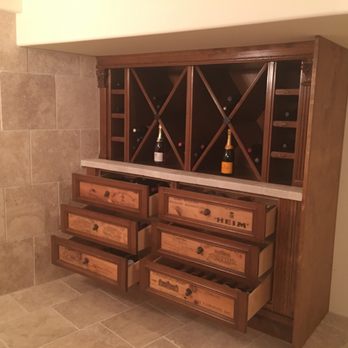
PROJECT CASE STUDY / PASADENA, CALIFORNIA
A homeowner noticed mold on the wine cellar ceiling. When the team opened the ceiling, they uncovered a much larger problem involving mold and inconsistent insulation.
See how M&M Cellar Systems approached this complex restoration project while identifying original wine cellar components that the homeowner could keep.
LOCATION
Pasadena, California
PROJECT TYPE
Residential Wine Cellar Restoration
MAIN CONCERN
Ceiling Mold and Insulation Problems
MATERIALS TO PRESERVE
Flooring and Long-Panel Wine Racks
THE SITUATION
A Small Visible Mold Problem Led to a Much Larger Discovery
A Pasadena homeowner contacted M&M Cellar Systems after noticing mold inside a residential wine cellar.
At first, the mold appeared to affect only the ceiling surface. However, when the team opened the ceiling, they found additional mold and inconsistent insulation behind the finished panels.
That discovery changed the scope of the wine cellar mold restoration project. Instead of addressing one visible area, the team had to investigate the ceiling structure, evaluate the insulation, and consider how the work would affect the existing cooling system.
Mario Morales and M&M already knew the property. Years earlier, the company had corrected problems with the original cooling installation. M&M continued maintaining the refrigeration equipment afterward.
That long-standing service relationship gave Mario and his team valuable knowledge of the cellar when the homeowner reported the mold problem.
01 / INITIAL INSPECTION
What Did M&M Find During the Initial Inspection?
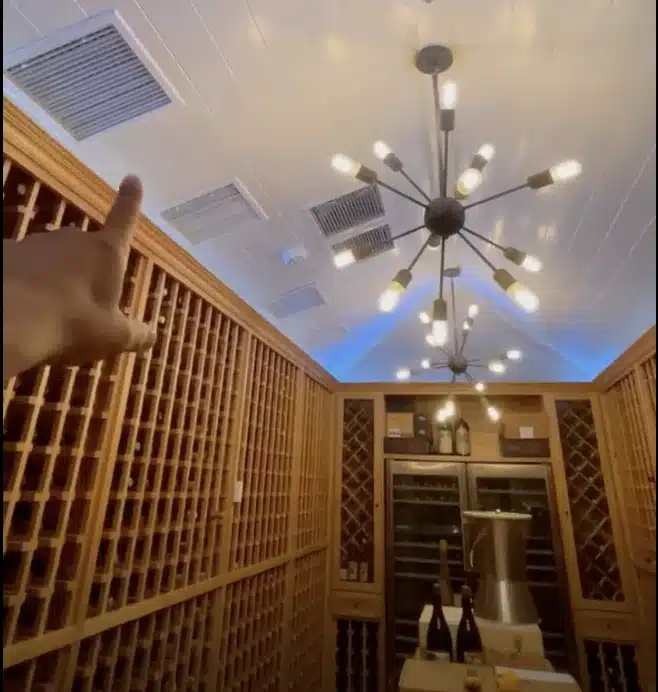
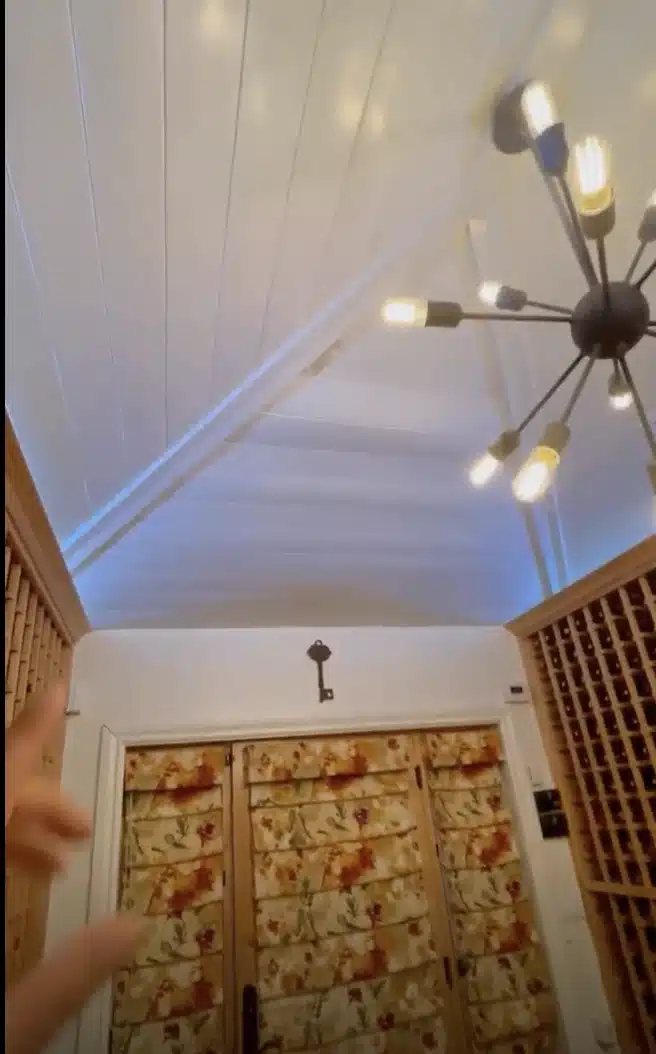
The Pasadena wine cellar featured full-height wooden wine racks, a white paneled ceiling, decorative beams, and modern chandeliers.
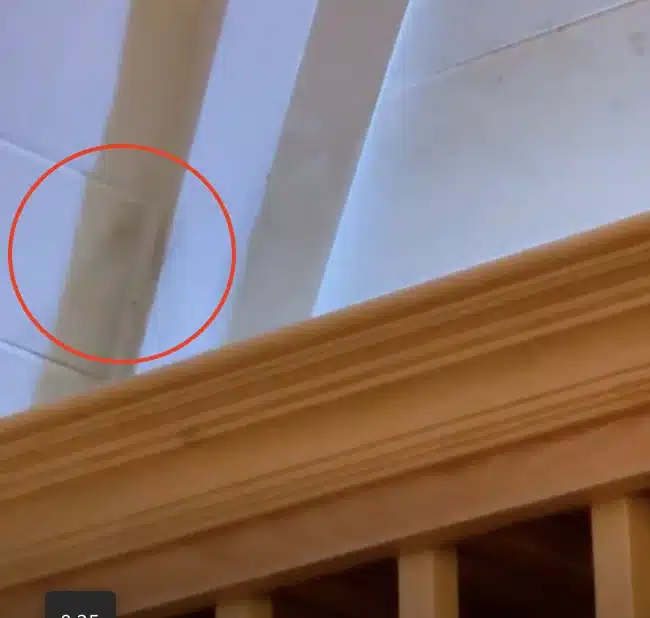
During the inspection, the team examined discolored areas along the ceiling panels and trim.
The visible mold initially suggested a relatively small problem. However, the finished ceiling concealed the insulation, framing, and other components above it.
The team needed to look behind the ceiling to understand the full extent of the problem.
02 / CEILING INVESTIGATION
What Did the Team Discover When They Opened the Ceiling?
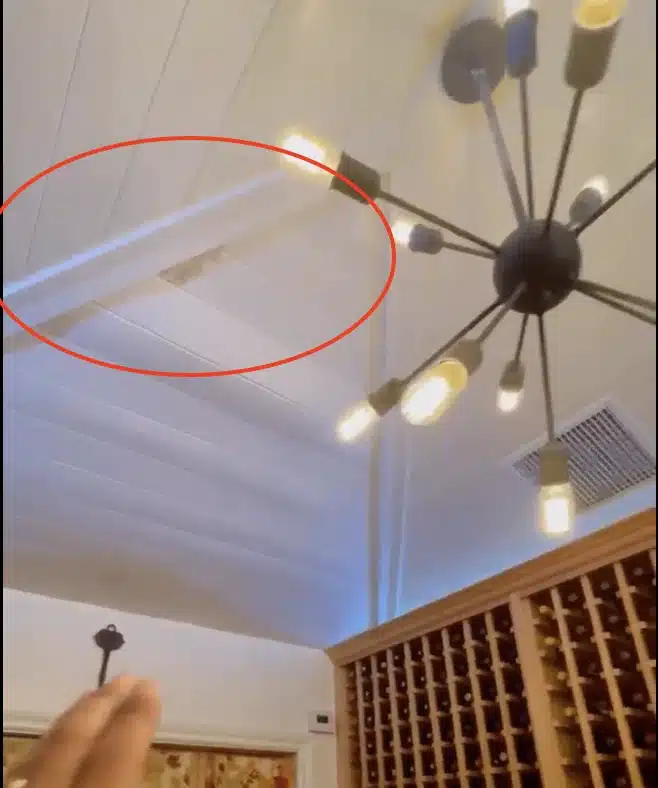
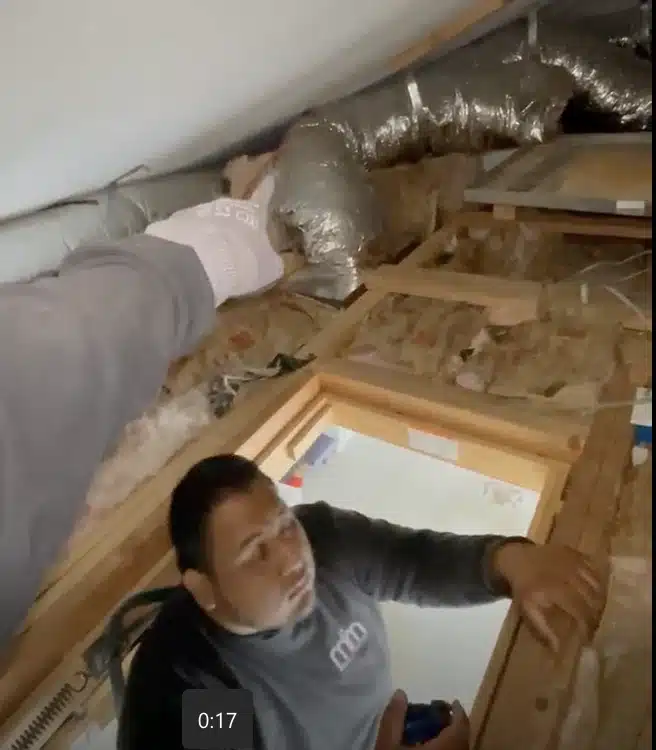
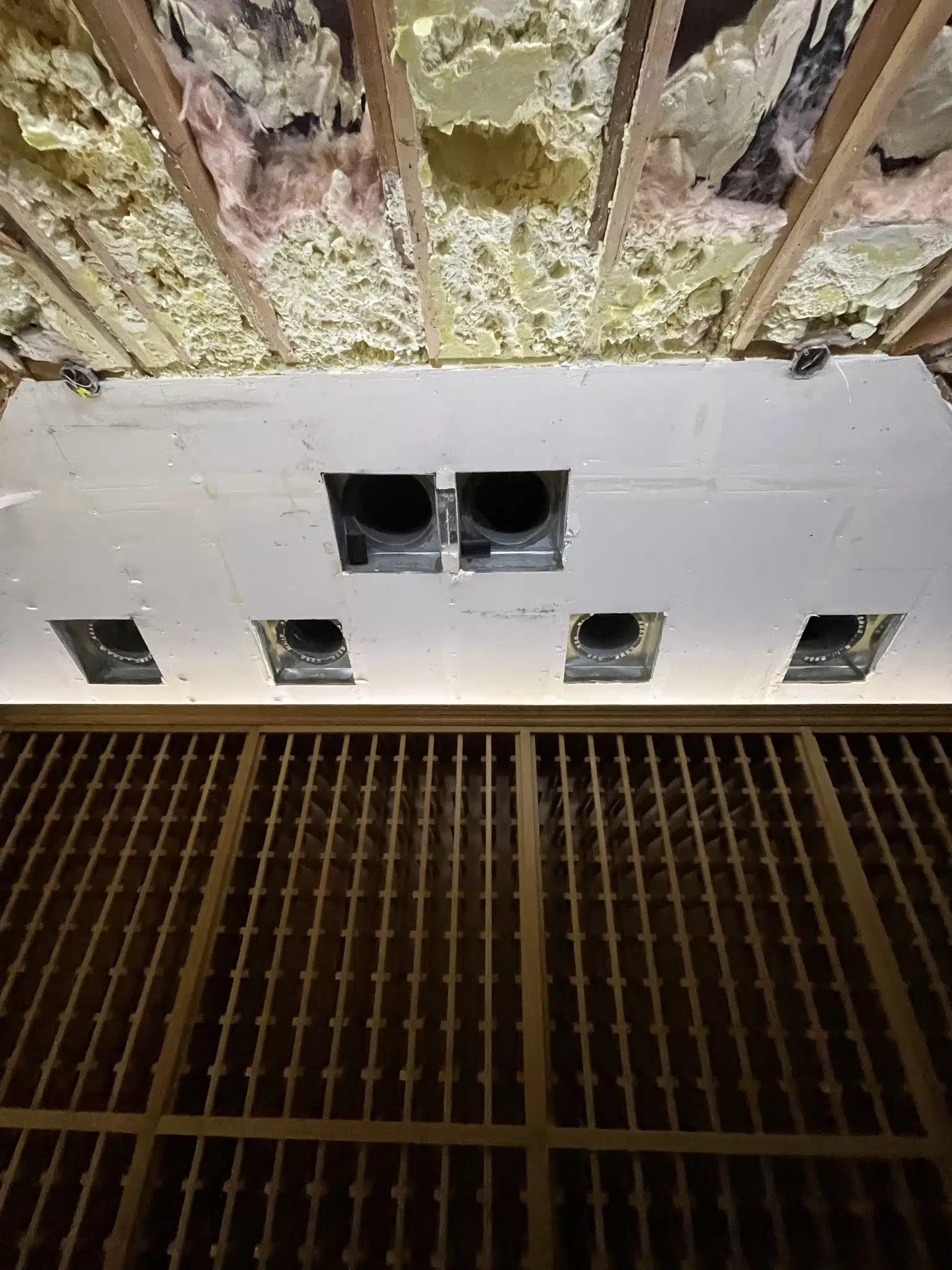
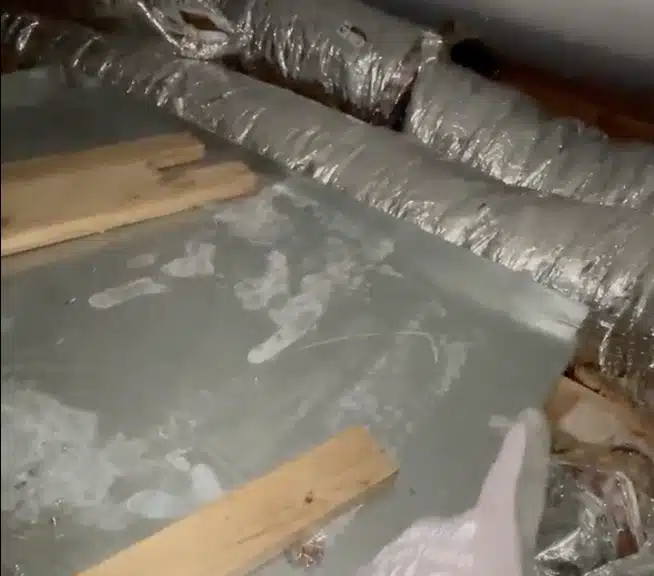
Once the team opened the ceiling, they discovered that the mold extended beyond the visible surface.
They also found inconsistent insulation throughout portions of the ceiling assembly.
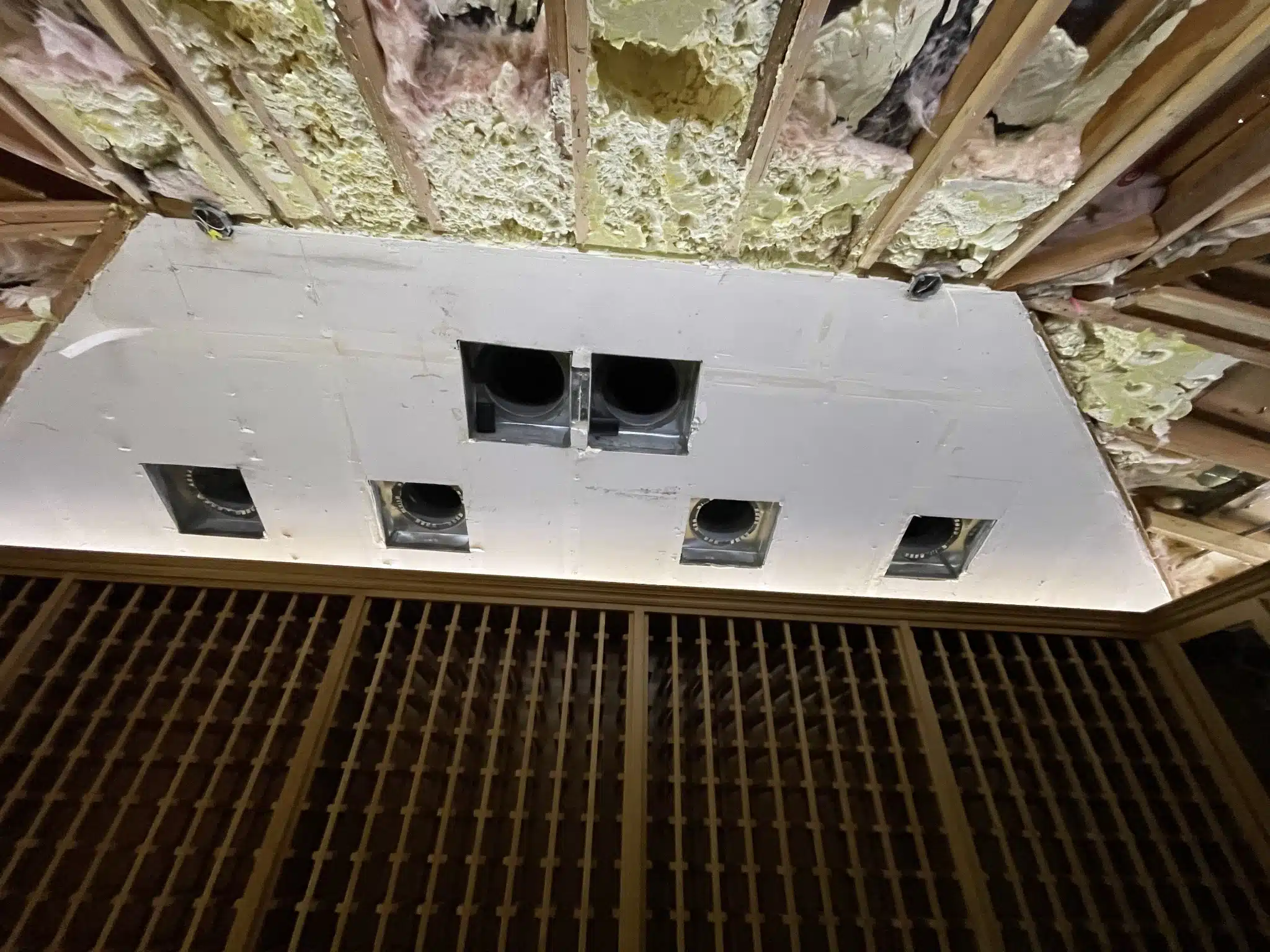
Removing the finished ceiling panels exposed the framing, insulation, and surrounding construction. The team could now examine conditions that the original ceiling had concealed.
These findings showed why surface cleaning alone would not address the larger concerns.
The restoration now required a closer evaluation of the existing construction and a broader plan for addressing the affected areas.
03 / INSULATION PROBLEMS
Why Did the Wine Cellar Insulation Problems Matter?
A refrigerated wine cellar needs more than a reliable cooling system. Its walls and ceiling must also help control temperature and moisture.
Proper insulation limits heat transfer, while appropriate air sealing helps keep warm, humid air from entering the cooled space.
When a cellar has gaps or inconsistent insulation, temperature differences can create conditions that encourage condensation and moisture buildup.
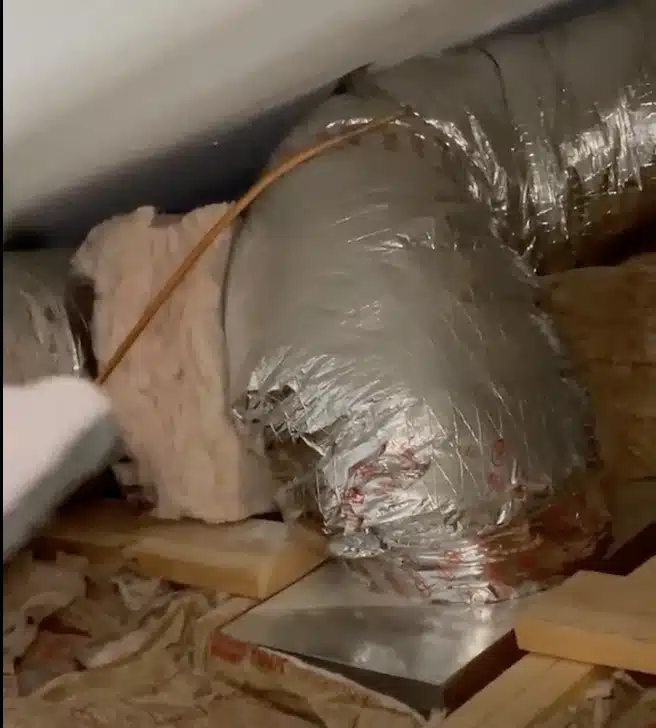
In this Pasadena project, the opened ceiling exposed areas with different insulation conditions.
Mario discussed these findings and explained that he had previously recommended closed-cell spray foam insulation.
The right insulation method depends on the cellar’s construction. Here, the team needed to consider the existing insulation conditions before planning the broader restoration.
Key finding: The visible mold revealed only part of the problem. Opening the ceiling exposed insulation conditions that the team could not evaluate from inside the finished cellar.
04 / PRESERVING ORIGINAL MATERIALS
Could the Homeowner Keep the Original Wine Racks and Flooring?
Although the project required more extensive restoration work, the homeowner did not necessarily need to replace every original component.
Mario identified two materials that the team could salvage: the existing flooring and the long-panel wooden wine racks.
Removing and Cleaning the Wine Racks
The cellar featured long-panel wooden racks. Their construction allowed the team to move them temporarily and gain access to the areas that needed restoration.
Mario explained that the team could clean and reuse these particular racks.
He also noted that standard wine racking might not have offered the same option. The design and condition of the long-panel racks made a difference in this project.
Preserving the Original Flooring
Mario also identified the existing flooring as suitable for salvage.
Keeping appropriate original materials can help homeowners avoid unnecessary reconstruction and preserve the appearance of their cellar.
However, not every material can withstand mold exposure or cleaning. The condition, construction, and extent of contamination determine whether a component can remain in use.
05 / RESTORATION SCOPE
How Did a Mold Inspection Turn Into a Larger Restoration Project?
The homeowner initially contacted M&M about visible mold. However, the ceiling investigation revealed problems that required more than surface cleaning.
The team had to account for the exposed structure, insulation, wine racks, flooring, and cooling-related components.
M&M already understood the cellar’s refrigeration equipment because the company had serviced it for years. That experience helped the team consider how construction work could affect the cooling system.
Mario also discussed the existing cooling ductwork and potential equipment replacement or modification considerations.
The project called for a broader restoration plan that addressed the cellar’s construction and refrigeration requirements together.
01
Investigate the Affected Areas
Examine concealed ceiling conditions and determine how far the problems extend.
02
Preserve Suitable Components
Move the long-panel racks, assess the existing materials, and identify components that can undergo cleaning and reuse.
03
Coordinate the Restoration
Plan the work around the insulation, construction access, original materials, and refrigeration requirements.
M&M CELLAR SYSTEMS
Wine Cellar Restoration Requires More Than Cooling-System Repairs
M&M had maintained the homeowner’s cooling equipment for years. When the mold problem appeared, the company faced a situation that extended beyond refrigeration maintenance.
The ceiling investigation uncovered additional mold and inconsistent insulation. At the same time, Mario identified original materials that the homeowner could preserve.
The project highlights an important point: a wine cellar’s cooling equipment, insulation, moisture control, and construction all influence how the room performs.
Mario wants homeowners to trust M&M for more than routine cooling-system service.
This Pasadena project demonstrates how the company approaches broader wine cellar problems and helps coordinate the work they require.
Watch: Moldy Wine Cellar Restoration — Before and After
Mario Morales explains the cellar’s service history, ceiling findings, insulation problems, salvageable materials, and cooling ductwork.
VIDEO COMING SOON!
LESSONS FROM THE PROJECT
What Can Homeowners Learn From This Pasadena Wine Cellar Restoration?
Visible Mold May Not Reveal the Entire Problem
A finished ceiling may hide moisture or insulation problems that extend beyond the visible mold.
Insulation and Cooling Work Together
The cooling system needs a properly insulated and sealed enclosure to maintain stable conditions.
Homeowners May Preserve Some Original Materials
A suitable restoration plan may allow homeowners to keep certain wine racks and flooring after appropriate assessment and cleaning.
Complex Projects Need Coordination
Restoration teams must consider how insulation, construction, original materials, and refrigeration systems affect one another.
Related Reading:
Wine Cellar Cooling Unit Troubleshooting
Learn how M&M helps owners maintain their systems through
wine cellar cooling maintenance
.
FREQUENTLY ASKED QUESTIONS
Common Questions About Wine Cellar Mold Restoration
Can you restore a wine cellar after finding mold?
Yes, restoration teams can sometimes repair a mold-affected cellar without replacing every component. The necessary work depends on the moisture conditions and the affected materials. In this Pasadena project, Mario identified the original flooring and long-panel racks as salvageable.
Can insulation problems contribute to wine cellar mold?
Yes. Inadequate insulation and air sealing can contribute to condensation and moisture problems. When the team opened the Pasadena cellar ceiling, they found inconsistent insulation that required closer evaluation.
Can homeowners reuse wooden wine racks after mold exposure?
Sometimes. The material, construction, condition, and extent of contamination determine whether a rack can undergo cleaning and reuse. In this project, the long-panel racks offered that option, but not every wine rack will.
Does cooling-system maintenance prevent every moisture problem?
No. Regular maintenance helps protect cooling performance, but insulation, air leaks, and construction problems can also contribute to moisture. Homeowners need to consider the entire cellar when investigating recurring problems.
M&M CELLAR SYSTEMS / PASADENA & LOS ANGELES
Noticing Mold or Moisture Problems in Your Wine Cellar?
Have you noticed ceiling stains, condensation, recurring mold, or signs of insulation problems? Contact M&M Cellar Systems to discuss your wine cellar’s condition and arrange an assessment.